 By esportsstream74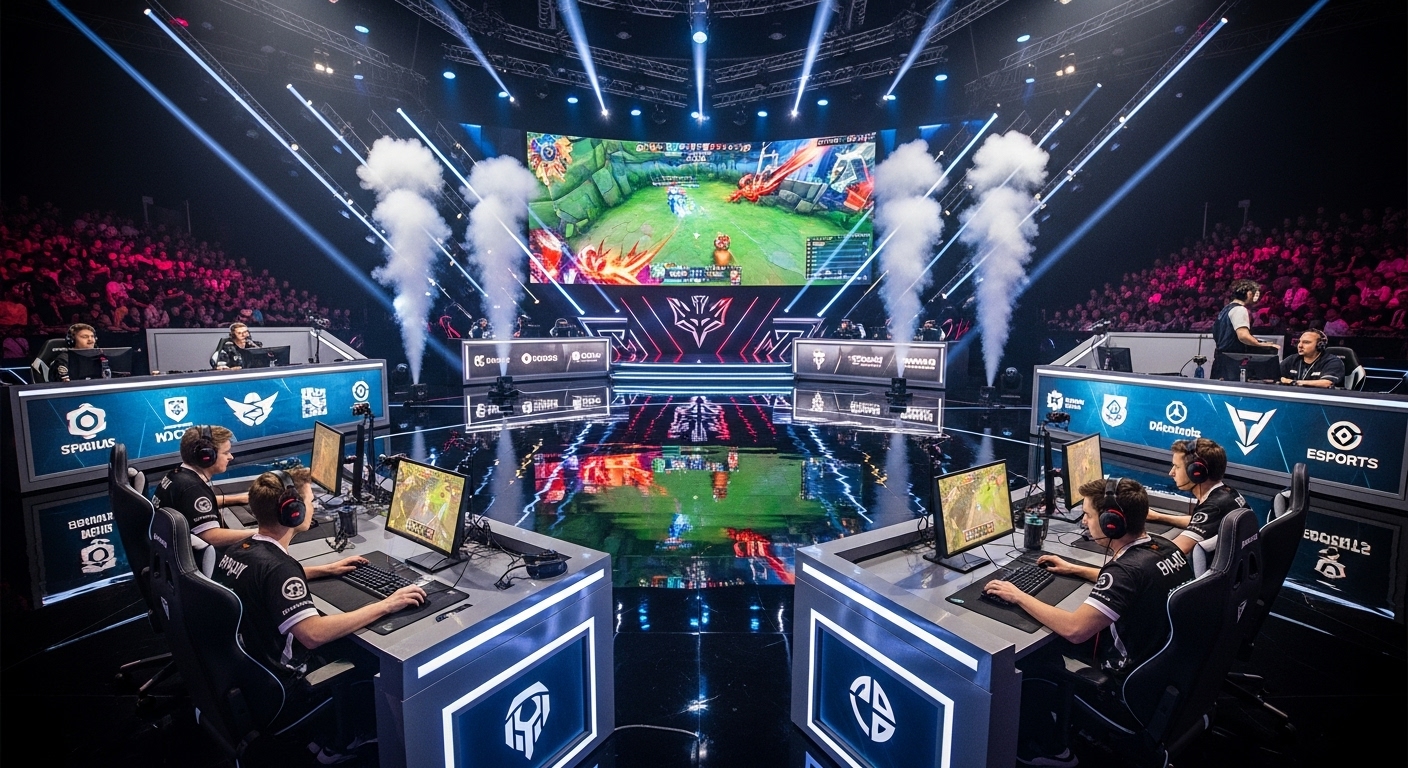
Introduction
In the span of just a few decades, video games have evolved from a niche hobby enjoyed by a handful of enthusiasts into a global phenomenon that rivals traditional sports in scale, passion, and profitability. This transformation has given birth to what we now know as esports—a competitive, organized, and professionalized form of video gaming that attracts millions of players and viewers around the world.
Esports is no longer a subculture; it is a mainstream entertainment industry with its own celebrities, teams, coaches, tournaments, and even dedicated arenas. The journey from the early arcade competitions of the 1980s to today’s massive international tournaments with multimillion-dollar prize pools is nothing short of remarkable. This blog explores the rise of esports, its impact on culture, technology, and society, and the promising future that lies ahead for this digital revolution.
The Origins of Esports
While competitive gaming may seem like a recent trend, its roots stretch back much further than most people realize. The first known video game competition took place in 1972 at Stanford University, where students competed in the game Spacewar!. The prize? A year’s subscription to Rolling Stone magazine.
By the 1980s, the popularity of arcade games like Pac-Man and Donkey Kong created the first generation of competitive gamers. Tournaments were often small and local, but they represented the growing fascination with gaming skill and competition. Magazines began publishing high-score lists, and television shows occasionally featured the best players.
However, the limitations of technology meant that these early competitions were often informal and hard to organize. It wasn’t until the internet revolution of the 1990s that esports began to take shape as a structured and global phenomenon.
The Internet Era: The Birth of Online Competition
The advent of the internet changed everything. Suddenly, players could compete with others around the world without leaving their homes. Games like Quake, StarCraft, and Counter-Strike defined the late 1990s and early 2000s era of competitive gaming. These titles introduced concepts like ranked ladders, clans, and tournaments that could be organized online.
In South Korea, StarCraft became a cultural phenomenon. Internet cafes known as “PC bangs” sprouted up across the country, and professional players began to gain fame comparable to athletes and pop stars. Television networks started broadcasting matches, sponsors poured in money, and the foundations for modern esports were laid.
By the mid-2000s, global competitions such as the World Cyber Games and Electronic Sports World Cup emerged, giving players from different continents the opportunity to showcase their talents. Esports was no longer confined to hobbyists—it was becoming a career path.
The Expansion into the Mainstream
The late 2000s and early 2010s marked a major turning point for esports. The rise of live streaming platforms like Twitch and YouTube Gaming gave audiences a way to watch tournaments and follow their favorite players in real time. This accessibility was revolutionary.
Before streaming, esports struggled with visibility. But with the click of a button, fans could now tune into a live event, engage in chat discussions, and feel part of a global community. The sense of connection and immediacy transformed esports into a spectator sport.
Games like League of Legends, Dota 2, and Counter-Strike: Global Offensive became household names. Developers began to design their games with competitive balance and spectator experience in mind. Massive tournaments like The International and the League of Legends World Championship offered prize pools in the tens of millions of dollars and filled stadiums with roaring fans.
The Business of Esports
Behind the screens, esports is also a rapidly growing business ecosystem. Teams, sponsors, event organizers, broadcasters, and advertisers all play vital roles in the industry’s expansion.
Professional esports organizations function much like traditional sports teams. They recruit players, hire coaches, and sign sponsorship deals with major brands. The biggest organizations, such as Team Liquid, Fnatic, and Cloud9, operate across multiple games and regions, building global fanbases.
Sponsorship and advertising have become crucial revenue streams. Tech companies, energy drink brands, and even automobile manufacturers have invested heavily in esports to reach the coveted youth demographic. Streaming rights, merchandise sales, and tournament ticketing further add to the economic engine driving the industry.
The global esports market has grown into a multibillion-dollar sector. Its audience continues to expand, with hundreds of millions of viewers tuning in annually. Esports is no longer seen as an emerging field—it is now a cornerstone of modern entertainment.
The Players: Modern-Day Digital Athletes
At the heart of esports are the players—the digital athletes who dedicate countless hours to mastering their craft. Like traditional athletes, professional gamers follow strict training regimens, analyze gameplay footage, and maintain physical fitness to enhance reflexes and concentration.
Top-tier players such as Faker from League of Legends or s1mple from Counter-Strike have achieved legendary status within the community. They are admired for their skill, discipline, and consistency, and their fanbases number in the millions.
The professional lifestyle of an esports player is intense. Training can last 10 to 12 hours a day, often involving scrimmages, strategy sessions, and mechanical drills. Teams employ psychologists, nutritionists, and physical trainers to ensure players stay in peak condition—both mentally and physically.
Although the average career span of an esports player is shorter than that of a traditional athlete due to the intense reflex and cognitive demands, many transition into coaching, content creation, or game analysis after retirement. Their influence continues to shape the next generation of gamers.
The Role of Technology in Esports Growth
Technology has been the backbone of esports from the very beginning. Advancements in hardware, internet connectivity, and broadcasting technology have enabled the seamless global experience that defines esports today.
High-performance gaming PCs, low-latency monitors, and precision peripherals ensure fair competition and peak performance. Meanwhile, innovations in streaming technology allow millions of viewers to watch matches simultaneously with minimal delay.
Virtual reality (VR) and augmented reality (AR) are also starting to find their place in esports, offering immersive experiences for both players and audiences. Artificial intelligence is being used to analyze player performance, detect cheating, and enhance broadcast production with real-time insights.
Moreover, the widespread adoption of 5G and cloud gaming technology promises to make esports even more accessible. With faster and more stable connections, competitive gaming can flourish anywhere—from major cities to remote regions.
The Esports Ecosystem: Beyond the Players
Esports thrives on a complex ecosystem that extends far beyond just players and teams. Tournament organizers, shoutcasters (commentators), analysts, coaches, and production crews all contribute to the experience.
Shoutcasters are particularly vital—they narrate the matches, break down strategies, and inject emotion into every play. Their voices define the excitement of esports much like traditional sports commentators bring life to football or basketball games.
Coaches develop team strategies, manage player morale, and adapt gameplay tactics to opponents. Analysts dissect game data to optimize performance and exploit weaknesses. Production teams ensure that broadcasts are engaging and polished, using cinematic camera angles, replays, and graphics.
This collaborative infrastructure gives esports its professional sheen and ensures fans are not just watching a game—they’re experiencing a spectacle.
The Cultural Impact of Esports
Esports has become a defining element of digital culture. It has bridged geographic, linguistic, and social divides by bringing people together through a shared passion for gaming.
In many countries, esports has gained the same cultural status as traditional sports. Massive crowds gather in arenas, national teams represent their countries in international tournaments, and schools even offer esports scholarships and degree programs.
Pop culture has also embraced esports. Music, fashion, and media frequently collaborate with gaming brands. Celebrities from sports and entertainment invest in esports organizations or appear at tournaments, further legitimizing the industry’s mainstream appeal.
Esports has also helped redefine social interaction. For many young people, online communities formed through gaming are as meaningful as offline friendships. Esports provides a platform for teamwork, communication, and creativity, blending competition with community.
The Challenges Facing Esports
Despite its rapid growth, esports is not without challenges. The industry faces several hurdles that need to be addressed for sustainable development.
Player Burnout and Career Longevity
The demanding nature of esports training and competition often leads to burnout. Players are under immense pressure to perform, and with limited career spans, many struggle with mental and physical health issues. Organizations are increasingly prioritizing wellness programs to combat this issue.
Fairness and Regulation
As esports expands globally, ensuring fair play becomes complex. Issues like cheating, match-fixing, and performance-enhancing drugs have emerged. Establishing standardized regulations and governing bodies is essential to maintain integrity.
Gender Representation
Esports remains heavily male-dominated. Although women have made significant contributions as players, streamers, and organizers, gender discrimination and harassment remain persistent problems. Promoting inclusivity and creating safe environments for all participants is a crucial step forward.
Monetization and Sustainability
While top-tier tournaments and teams generate significant revenue, many smaller organizations struggle financially. Creating a sustainable ecosystem that supports amateur players, grassroots tournaments, and diverse game genres is vital for long-term health.
Esports in Education
An exciting new development is the integration of esports into education. Schools, colleges, and universities around the world are embracing esports as both a competitive activity and a learning opportunity.
Educational institutions are forming varsity esports teams, offering scholarships, and building dedicated gaming arenas. Beyond competition, esports teaches valuable skills such as teamwork, leadership, problem-solving, and strategic thinking.
Curriculums are also emerging around esports management, broadcasting, and game design—reflecting the industry’s wide range of career opportunities. This educational integration not only legitimizes esports but also prepares students for a future in the rapidly growing digital economy.
Esports and Traditional Sports: A New Rivalry and Partnership
The relationship between esports and traditional sports is both competitive and collaborative. Some see esports as a rival for the attention of younger audiences, while others recognize its potential as a complementary form of entertainment.
Traditional sports franchises have increasingly invested in esports. Football clubs, basketball teams, and even Formula 1 organizations have launched their own esports divisions to engage fans digitally. This crossover has blurred the lines between physical and virtual competition.
Interestingly, the training philosophies of both domains share similarities. Both require discipline, teamwork, and mental fortitude. The main difference lies in the medium—physical vs. digital. Yet both inspire similar emotions of excitement, tension, and triumph.
The Future of Esports
The future of esports looks incredibly bright. Analysts predict continued growth in viewership, investment, and mainstream recognition. With technological innovation accelerating, esports is likely to become even more immersive and accessible.
Virtual reality tournaments, AI-driven coaching systems, and mobile esports expansion are set to redefine the experience. Moreover, the inclusion of esports in multi-sport events such as the Asian Games signals its growing legitimacy as a true sport.
Esports may even play a role in the development of the metaverse—a digital universe where gaming, entertainment, and social interaction merge seamlessly. In such a future, esports could serve as a central pillar of virtual culture and identity.
Conclusion: The Legacy of Esports
From a humble arcade pastime to a global cultural and economic force, esports has charted a journey unlike any other form of entertainment. It stands as a testament to human creativity, technological progress, and the universal love of competition.
Esports has shattered stereotypes, created careers, and united millions across borders and backgrounds. It embodies the spirit of modern youth—innovative, connected, and passionate.
As the world continues to evolve digitally, esports is poised to remain at the forefront of this transformation. Whether viewed as a sport, a business, or an art form, one thing is certain: esports is here to stay, and its story is only just beginning.